Self-Test B-6.2: Identify Types of Welds, Positions, Joints and Symbols
Complete Self-Test B-6.2 and check your answers.
- There are five basic joint designs used in welding. The lap, tee, corner and edge are four of them. Name the fifth joint design.
- Plug
- Vee
- Bevel
- Butt
- Which type of joint is shown in Figure 1?
-

Figure 1 Image for question 2 Plug
- Tee
- Butt
- Lap
-
- In order for lap and tee joints to support heavy or fluctuating loads, they need to be
- Welded from both sides
- Welded on only one side
- Single beveled
- Double beveled
- Which of the following is the most commonly selected corner joint?
- Half open
- Closed
- Flanged
- Open
- When are edge joints generally used?
- Sheet metal
- Pipe
- Heavy gauge metal
- Castings
- Which edge preparation is used on the tee joint in Figure 2?
-

Figure 2 Image for Question 6 Single U
- Single bevel
- Single J
- Single vee
-
- The butt joint shown in Figure 3 is a
-

Figure 3 Image for question 7 Single U
- Single J
- Double U
- Double J
-
- Which type of weld is most commonly used to weld lap, tee and corner joints?
- Groove weld
- Bead weld
- Fillet weld
- Plug weld
- Groove welds typically are what kind of joints?
- Tee joints
- Lap joints
- Edge joints
- Butt joints
- What typically determines the size of groove welds?
- Width between toes
- Depth of penetration
- Included angle
- Root radius
- In Figure 4, A indicates the
-
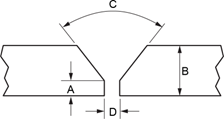
Figure 4 Image for Question 12 Root landing
- Root opening
- Thickness
- Bevel angle
-
- In Figure 4, B indicates the
- Included angle
- Root landing
- Thickness
- Root radius
- In Figure 4, D indicates the
- Root landing
- Included angle
- Bevel angle
- Root opening, gap
- In what position would one weld a 1G?
- Fillet weld in the vertical position
- Groove weld in the flat position
- Gillet weld in the horizontal position
- Groove weld in the vertical position
- In what position would one weld a 2G?
- A horizontal fillet weld
- A vertical groove weld
- A vertical fillet weld
- A horizontal groove weld
-
Which weld position is shown in Figure 5?
-
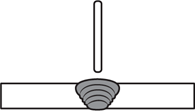
Figure 5 Image for Question 16 Flat
- Horizontal
- Vertical
- Overhead
-
Answer Key: Self-Test B-6.2 is on the next page.